In short
Montessori is an approach to education that begins with a simple question: how does a child learn naturally? The answer comes from carefully observing children, not from a theory imposed from outside.
Who was Maria Montessori?
Maria Montessori was an Italian physician and educator. Her method has been used for over a hundred years, in many countries, and starts from one central idea: the first six years are the period in which a child's personality is built, and the adult helps the child rather than replacing them.
How does a child learn in the first six years?
In the early years, a child learns to speak, walk and think, and forms their will. Montessori called this capacity the absorbent mind: children learn through experience, movement and repetition, not through lessons and explanations.
That is why education does not mean "filling" the child with knowledge, but offering the conditions in which they build their own abilities.
What is the prepared environment?
In a Montessori classroom, everything is designed for the child: low shelves, small tables and chairs, real and beautiful objects, each in its place. The child can reach everything they need on their own and knows where to put things back.
The environment responds to sensitive periods, the moments when a child is strongly drawn to language, movement, order or small objects. And order is not a whim: clean, complete materials are a permanent invitation to work.
What does the teacher do?
The teacher does not stand in front of the class and teach everyone at once. She is like a museum guide: she shows you where things are, but lets you choose. Her role changes as the child grows. Meet the Arcadia team.
What are Montessori materials?
In a regular classroom, the adult explains an idea. In Montessori, the idea becomes an object the child can pick up, touch and use alone, as many times as needed. Multiplication, for example, starts with a coloured material and only later moves on to written numbers.
The materials are not a goal but a means: through them, the child practises attention, movement and will.
Why do we call the child's activity "work"?
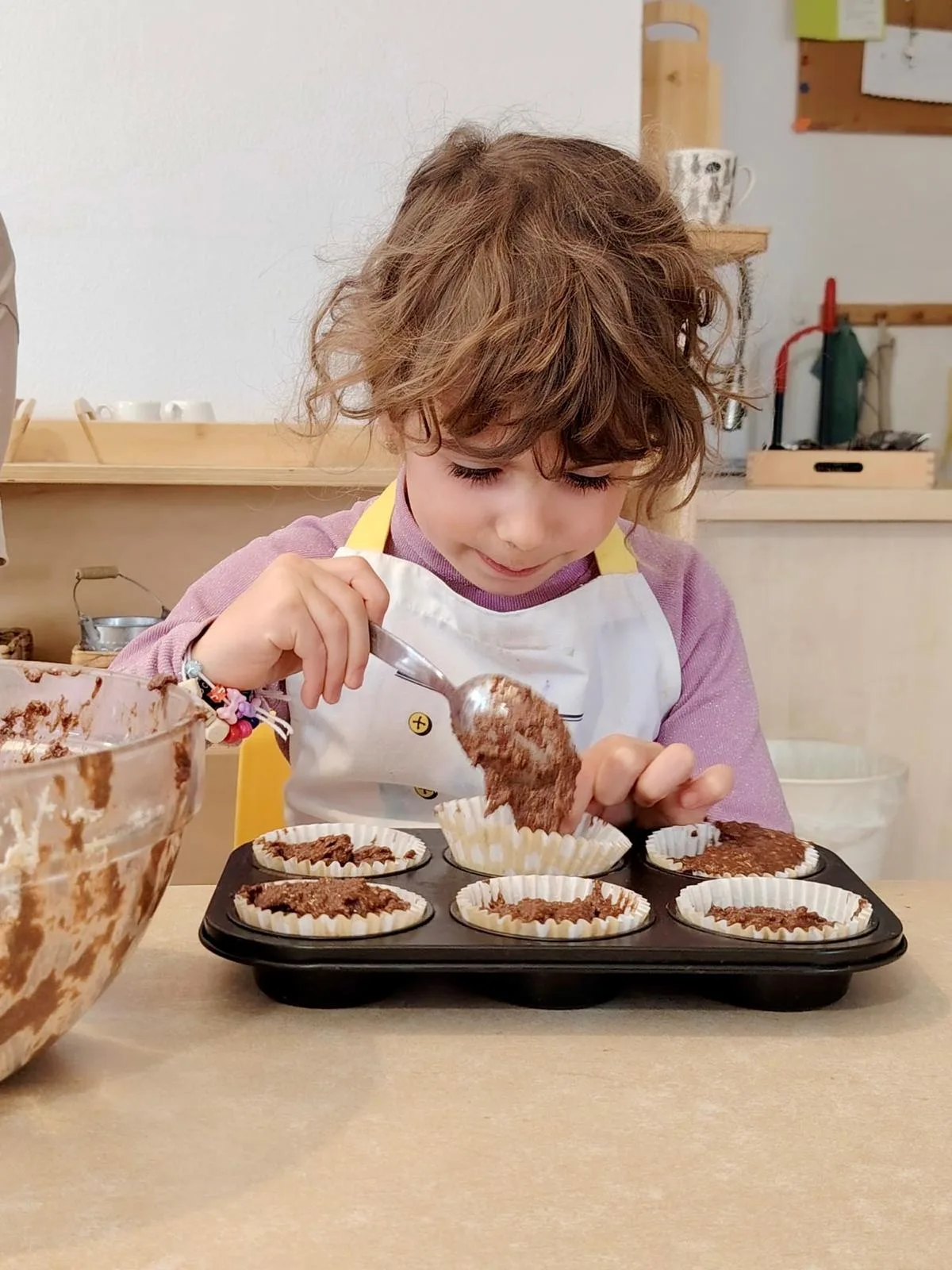
An adult works to produce something. A child works in order to grow: what matters is the activity itself, not the result. That is why children repeat the same activity dozens of times, and why we cannot do the work for them.
From this chosen work, carried through to the end, comes a calm discipline that does not come from punishment but from concentration. Freedom and discipline, Maria Montessori said, are two sides of the same coin.
How does the child progress?
Every child has their own pace, but the path is recognisable:
Montessori at 1.8–3 years and at 3–6 years
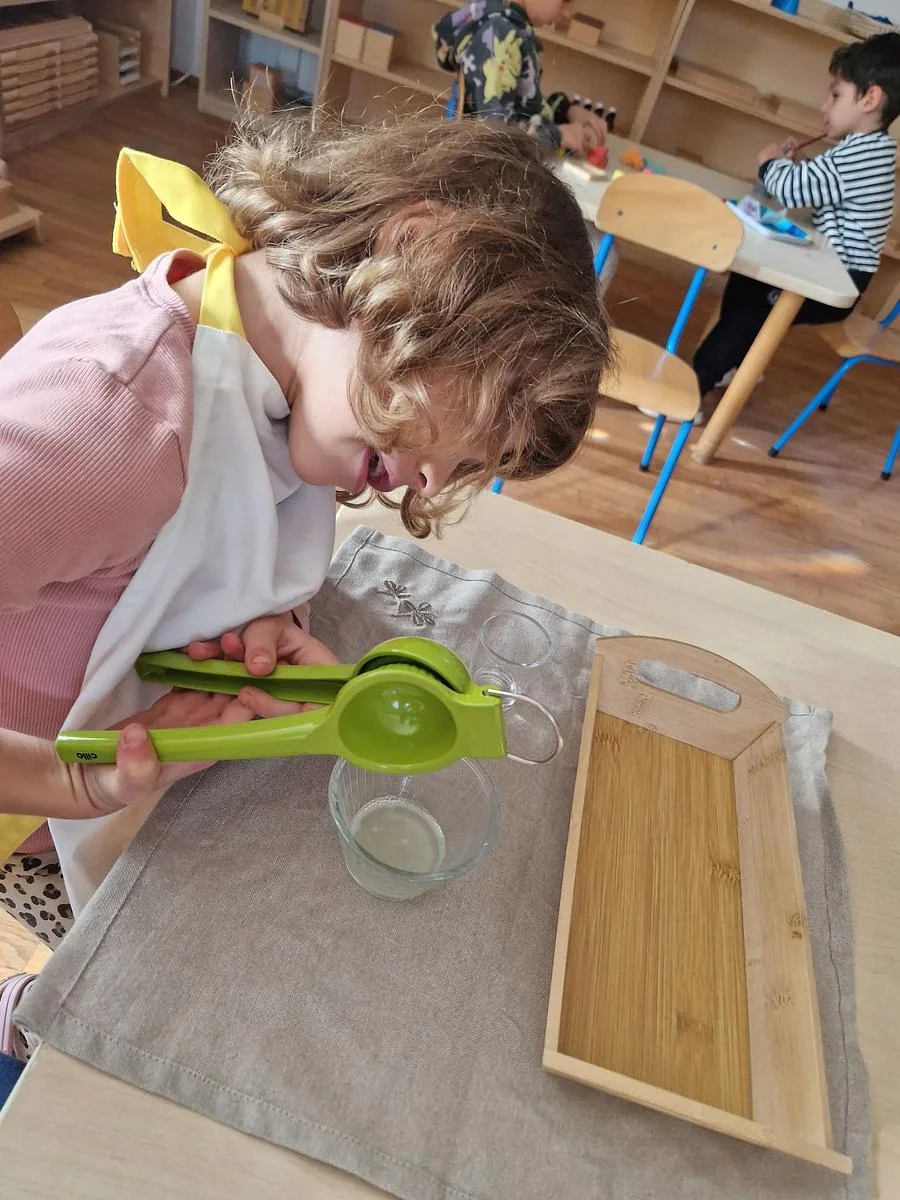
At 1.8–3 years, children build themselves through movement, language and the wish to do things alone: they pour, get dressed, set the table, learn new words. More in the article The difference between a regular nursery and the Montessori 1.8–3 years group.
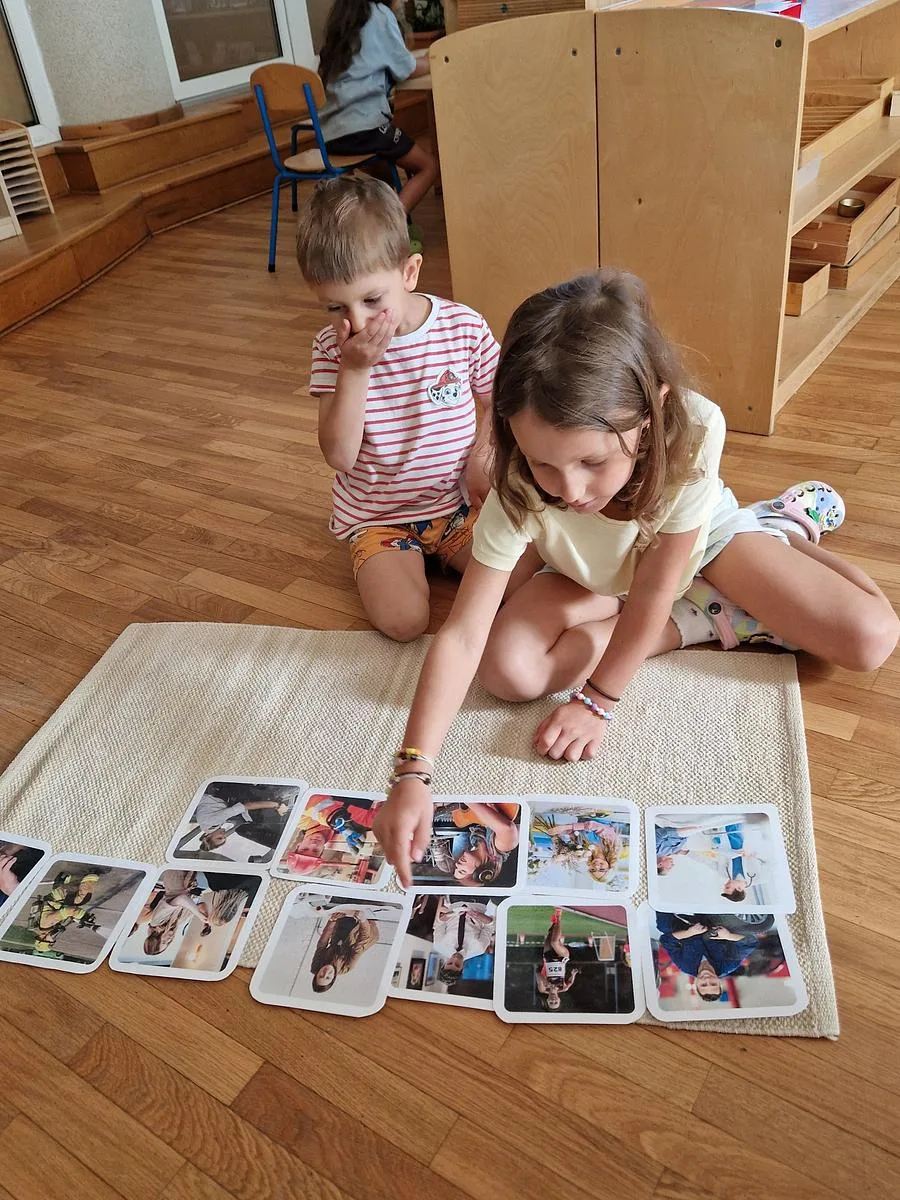
At 3–6 years, children want to understand the world. The classroom is organised into five areas: practical life, sensorial, language, mathematics and culture. Children also learn from one another, as we explain in Why are Montessori groups mixed-age?. The day includes a long, uninterrupted work period, which we call the symphony of silence.
You can find details about each group on the Group 1.8–3 years and Group 3–6 years pages.
What Montessori is not
Would you like to see a Montessori classroom?
It is best understood by seeing it. Visits are by appointment only: for the 1.8–3 years group, between 10:30 and 12:00, and for the 3–6 years group, between 14:00 and 15:00.
To book a visit, call us on 0724 557 667, Monday to Friday, between 08:00 and 18:00.
The ideas about the absorbent mind, the role of the teacher and the child's progress are drawn from the writings of Maria Montessori.