In short
One day, a child in our 1.8–3 years group chose to prepare an egg. They peeled it, sliced it and ate it. Then they gathered the dishes, took them to be washed and put the material back on the shelf. Nobody intervened. It took about twenty minutes.
A small scene, but it says almost everything about what a Montessori group means for the little ones.
What happens in the first three years?
At birth, a baby can only cry. At three, the child speaks in sentences, runs and has a will of their own. Maria Montessori called this a period of creation: in the shortest time of life, most of what makes us human is built.
The child does not achieve this through lessons, but by absorbing the world around them like a sponge: words, gestures, the way we speak. That is why we cannot "put" knowledge into them through explanations. We can, however, offer them a good environment and let them use it.
How does a toddler learn?
Watch a two-year-old for a few minutes: they move, pour, open, close, climb up and down. It looks like play, but it is serious work. The hands are the instruments of intelligence: with them, the child builds their thinking. In practice, this means letting them walk rather than always carrying them, and giving them real objects to practise with.
Why do they want to do everything alone?
At two, children want to get dressed alone, carry things and pour water, even if it takes ten times longer. The impulse comes from within, and our first reaction is often to do it for them. Maria Montessori said that in doing so we do not just stop the child, we block their development.
You may have seen an eighteen-month-old carrying a heavy chair across the room. We see wasted effort. Montessori saw a child building strength, coordination and will. No one can grow in the child's place.
Why let them finish what they started?
A child who is constantly interrupted can lose interest and concentration. We all intervene out of love and out of haste. That is exactly why, in a Montessori group, the preparation of the adult matters as much as the preparation of the space.
Regular nursery or Montessori group: where is the difference?
Many nurseries offer warm, attentive care. The difference is one of vision: do we see the child as someone to be looked after, or as someone who is building themselves?
| Regular nursery | Montessori group 1.8–3 years | |
|---|---|---|
| Image of the child | Fragile, dependent on the adult | A being with creative energies, working to build themselves |
| Role of the adult | Does things for the child | Prepares the environment, observes, does not interfere with the child's work |
| Environment | Adapted to the adult | At the child's height, with real objects |
| Activity | Planned by the adult, in a group | Chosen by the child and carried through to the end |
| Goal | Safety, comfort, supervision | Independence: "I can do it myself" |
What our 1.8–3 years group looks like
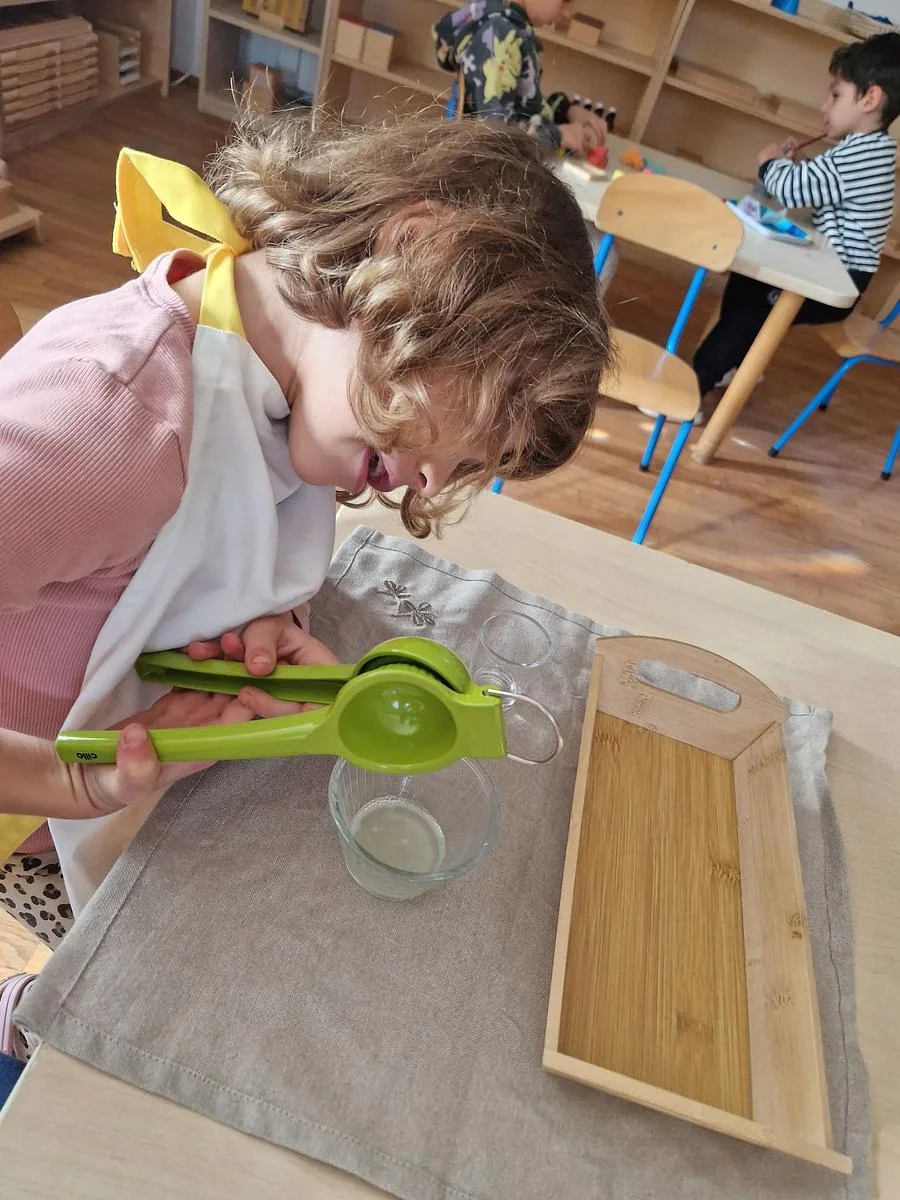
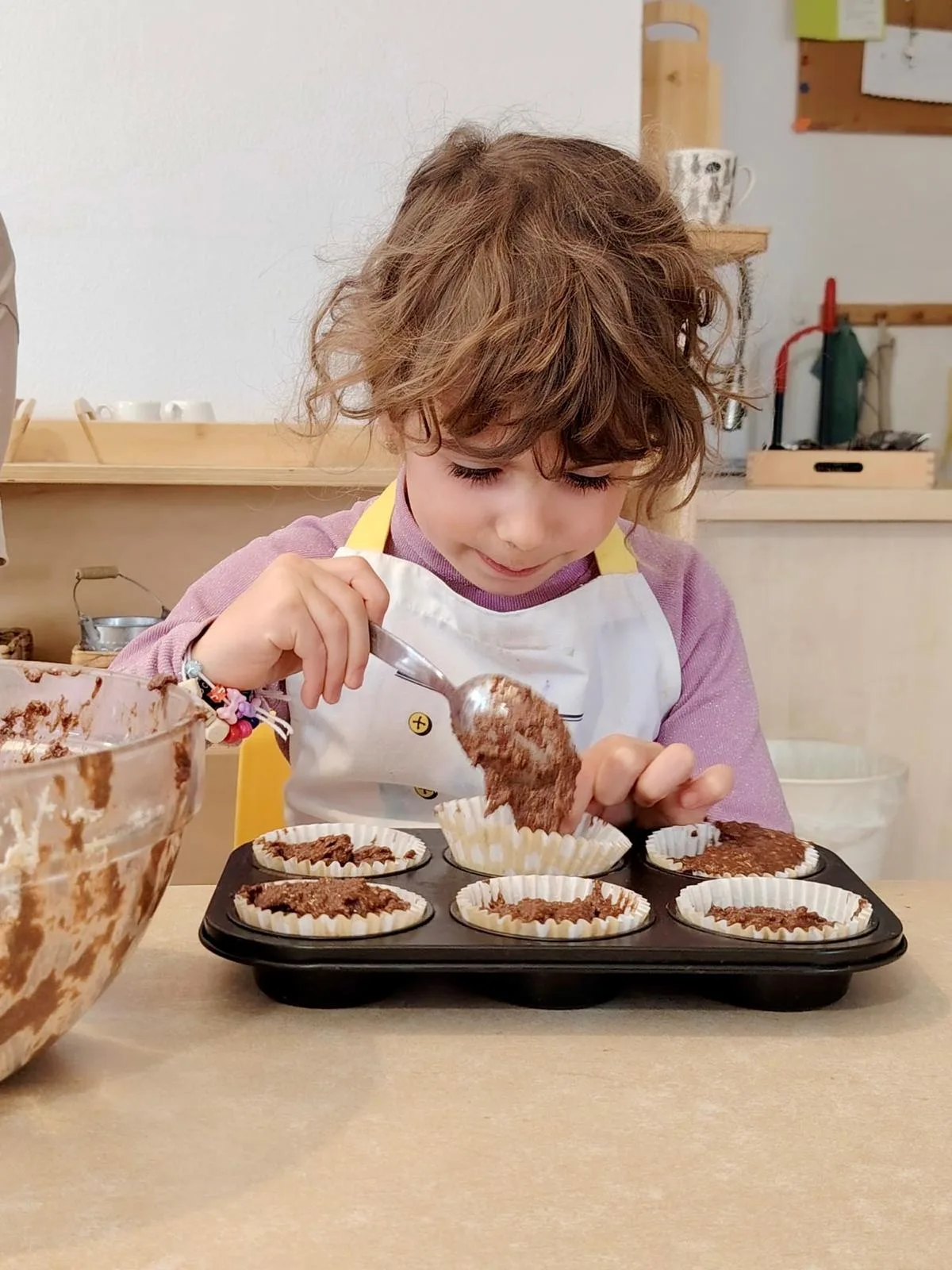
The room is designed for effort, not for rest: low shelves, real objects made of glass, ceramics and wood, small tables with space to move between them and a reading corner. Here children dress themselves, set the table, slice eggs, squeeze oranges and cut apples.
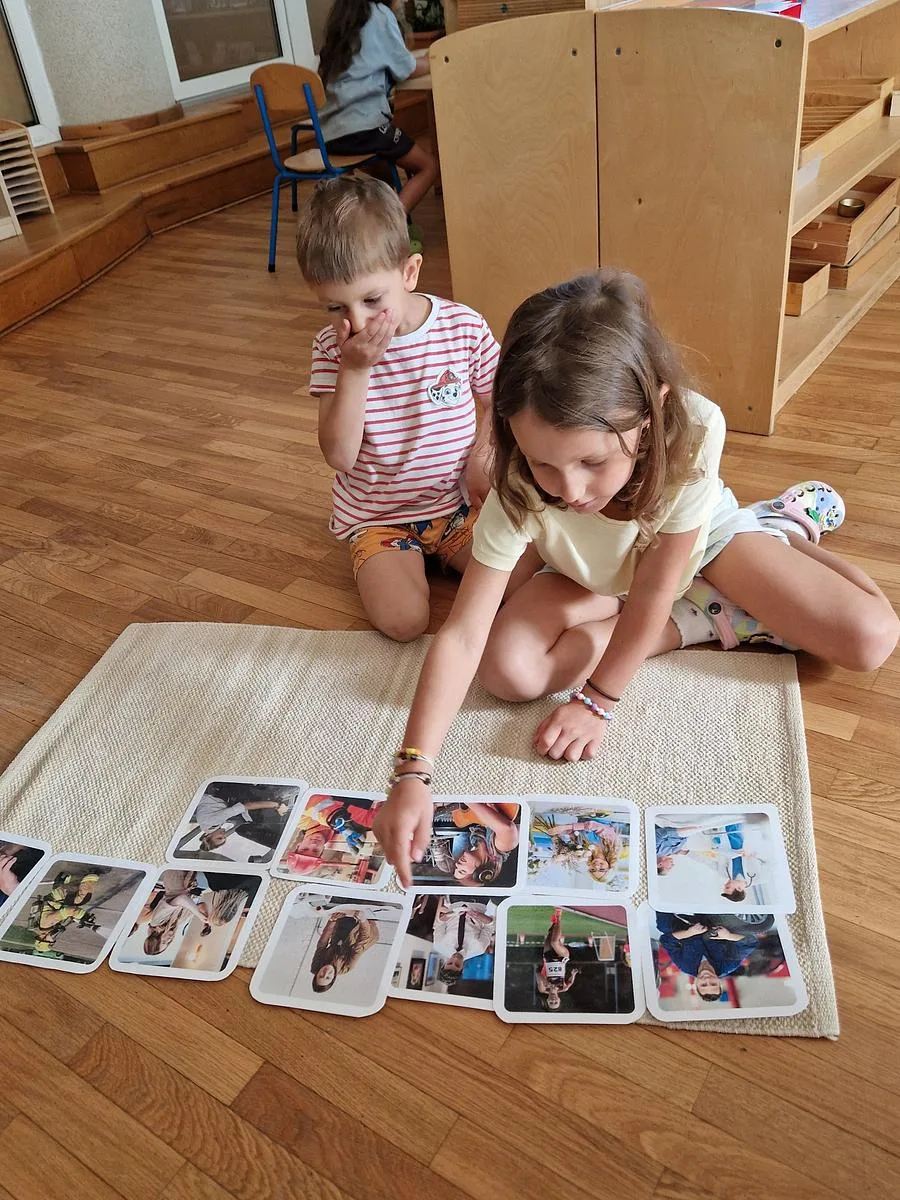
The adults move slowly, so as not to disturb. They present new materials, hold vocabulary lessons, help when the child asks, go with them to be changed and comfort them when they miss their mum. Not interfering with the child's work does not mean not being present.
The daily schedule, meals and rest and settling in are described on the 1.8–3 years group page.
How you can see the group
So as not to interrupt the children's work, parents do not enter the classroom during activities. Visits to the 1.8–3 years group take place between 10:30 and 12:00, by appointment only. When you come, look at whether the furniture is at the child's height, whether the objects are real and whether there is room to move.
To book a visit, call us on 0724 557 667, Monday to Friday, between 08:00 and 18:00.
Instead of a conclusion
A regular nursery asks: how do we keep the child safe and content? A Montessori group also asks: what is this child trying to build in themselves right now, and how can we let them do it?
The ideas are drawn from Maria Montessori, "The Absorbent Mind". For a general introduction, also read What does Montessori mean?