
Group 1.8–3 years
Group 1.8–3 years: Montessori for the youngest
The first three years are a time of great achievements: walking, language, coordinated movement and the child's ever stronger wish to do things alone.
At a glance
The 1.8–3 years group in a few lines
- Age
- from 1 year and 8 months to 3 years
- Group
- maximum 12 children
- Adults
- 2 at all times – AMI 0–3 Montessori teacher and teaching assistant
- Schedule
- short day until 13:00 · standard day until 16:30
- English
- Monday and Friday, included in the programme
- To enrol
- the child walks independently. They do not need to speak, and nappies are fine.
About the group
An environment prepared for the need of autonomy
At Arcadia, the environment for the 1.8–3 years group is prepared for the child's need for autonomy. Furniture, materials and activities are within reach, so the child can choose, explore, repeat and finish an activity at their own pace.
The adult observes, presents materials and steps in when the child needs support, without doing for them what they can learn to do alone.
The Curcubeu Group team
The adults who accompany your child every day
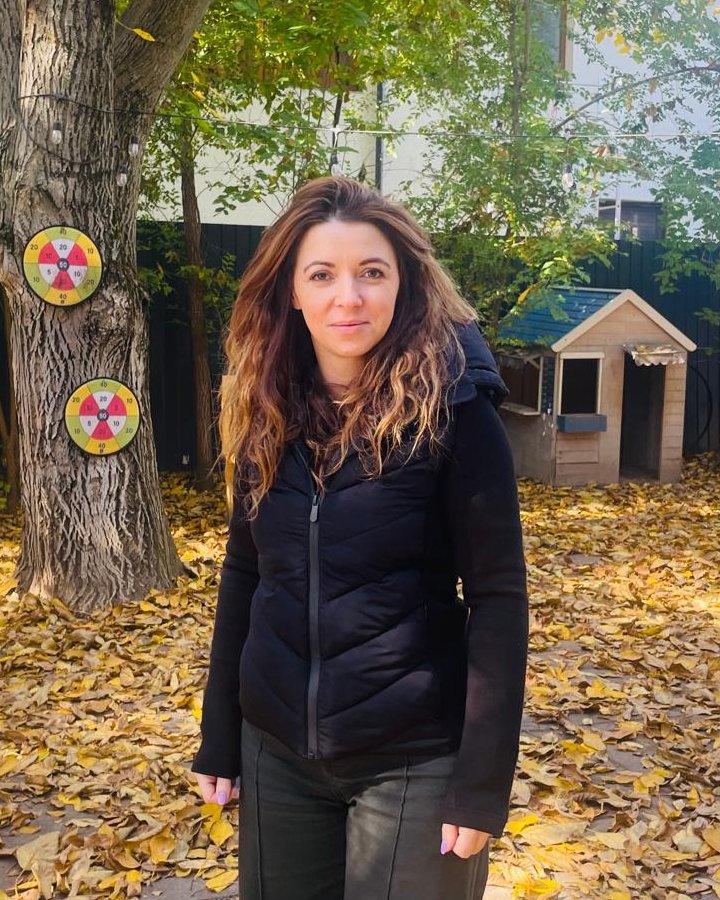
Gabriela Tudor
Teacher · AMI 0–3 years · Primary and Preschool Pedagogy
Gabriela finds her greatest joy in children's small successes: the moment they manage on their own something they have tried many times, when they gain confidence in their own abilities or begin to express their emotions.
4 years of experience in the 0–3 years environment
Read more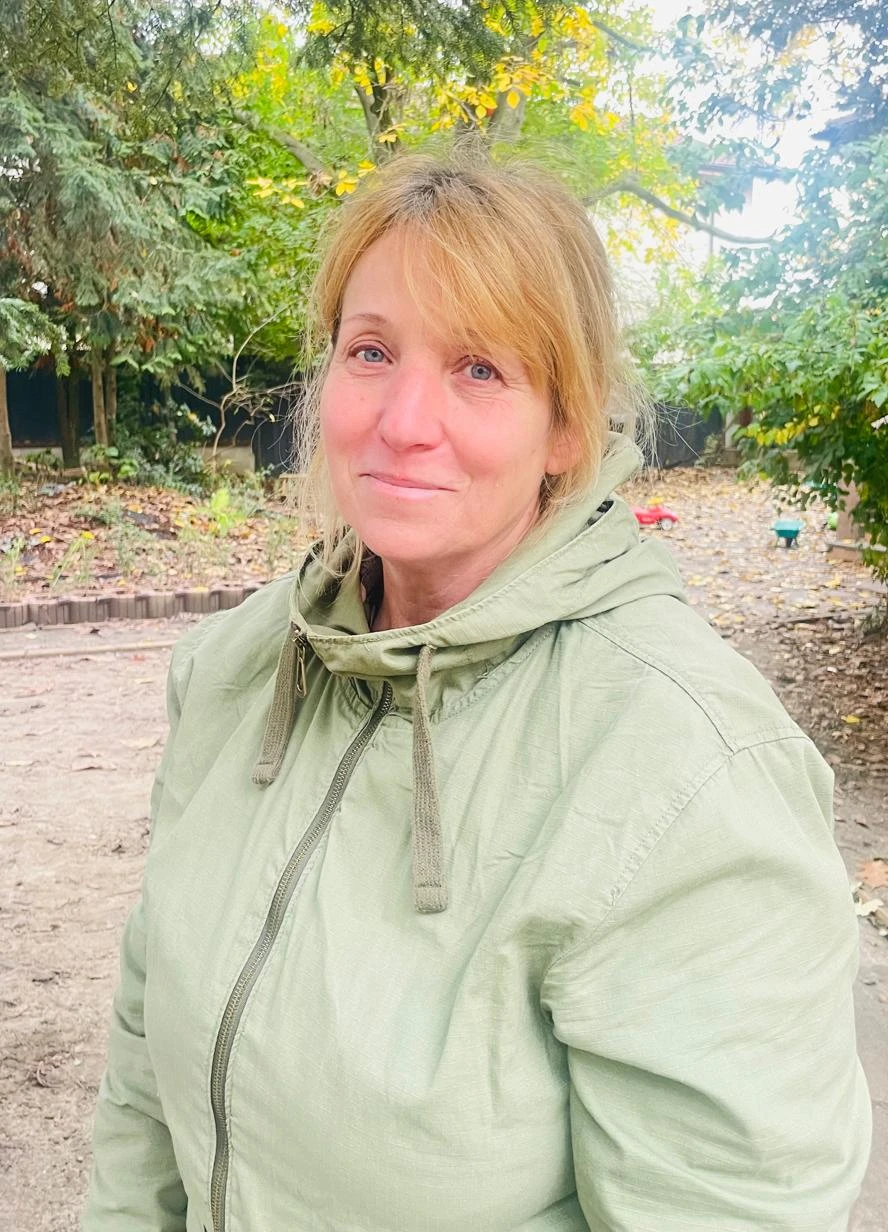
Gina Tănase
Teaching assistant
Gina appreciates the energy, curiosity and spontaneity of young children. She loves being with them while they develop language, autonomy and confidence in their own abilities.
2 years of experience in the 0–3 years environment
Read moreDaily schedule
A day in the 1.8–3 years group
- 08:00–09:00 · Children arrive
- 09:00–11:00 · Montessori work cycle (buffet breakfast at 09:00)
- 11:00–12:00 · Movement and outdoor activities
- 12:00–12:30 · Lunch
- 12:30–13:00 · Personal care and getting ready for rest
- 13:00End of short day
- 13:00–15:30 · Rest
- 15:30 · Afternoon snack
- 15:45–16:30 · Movement and outdoor activities
- 16:30End of standard day
The Montessori work cycle
The child chooses an activity and repeats it as often as needed
During the work cycle, the child chooses an activity from the available materials, works and can return to the same activity as many times as they need.
Hand–eye coordination
They open and close containers, match shapes, solve puzzles and work with age-appropriate Montessori materials. This is how they gain precision and control of movement.
Vocabulary and language
The teacher introduces new words through the three-period lesson, conversation and naming the objects around them. Stories and reading are part of classroom life.
Practical life
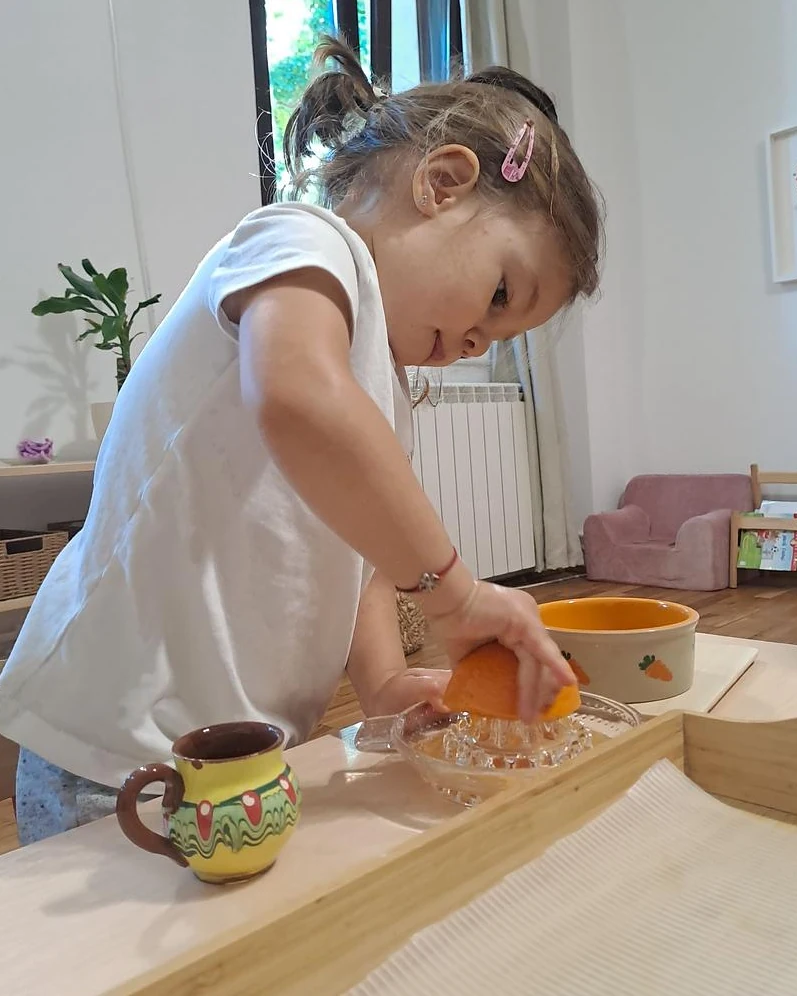
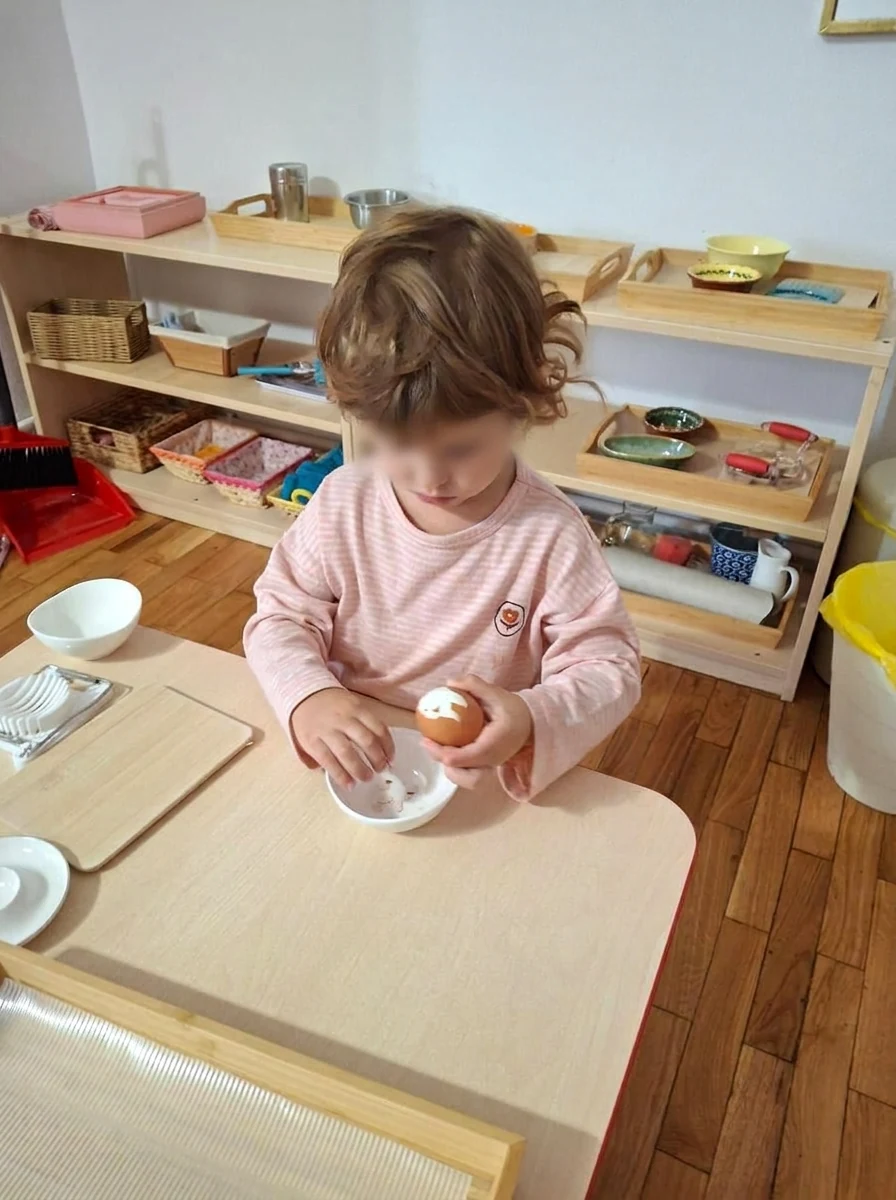
Real activities: wiping the table, making orange juice, slicing an egg, cutting a cucumber or an apple, polishing a mirror. They practise concentration and following steps, and discover they can take care of themselves and their environment.
English with Miss Linda — Monday and Friday, 40 minutes each during the work cycle, with a native teacher from the United States.
Friday practical workshop — most often, a cooking workshop.
Movement and the garden
The garden is an extension of the classroom
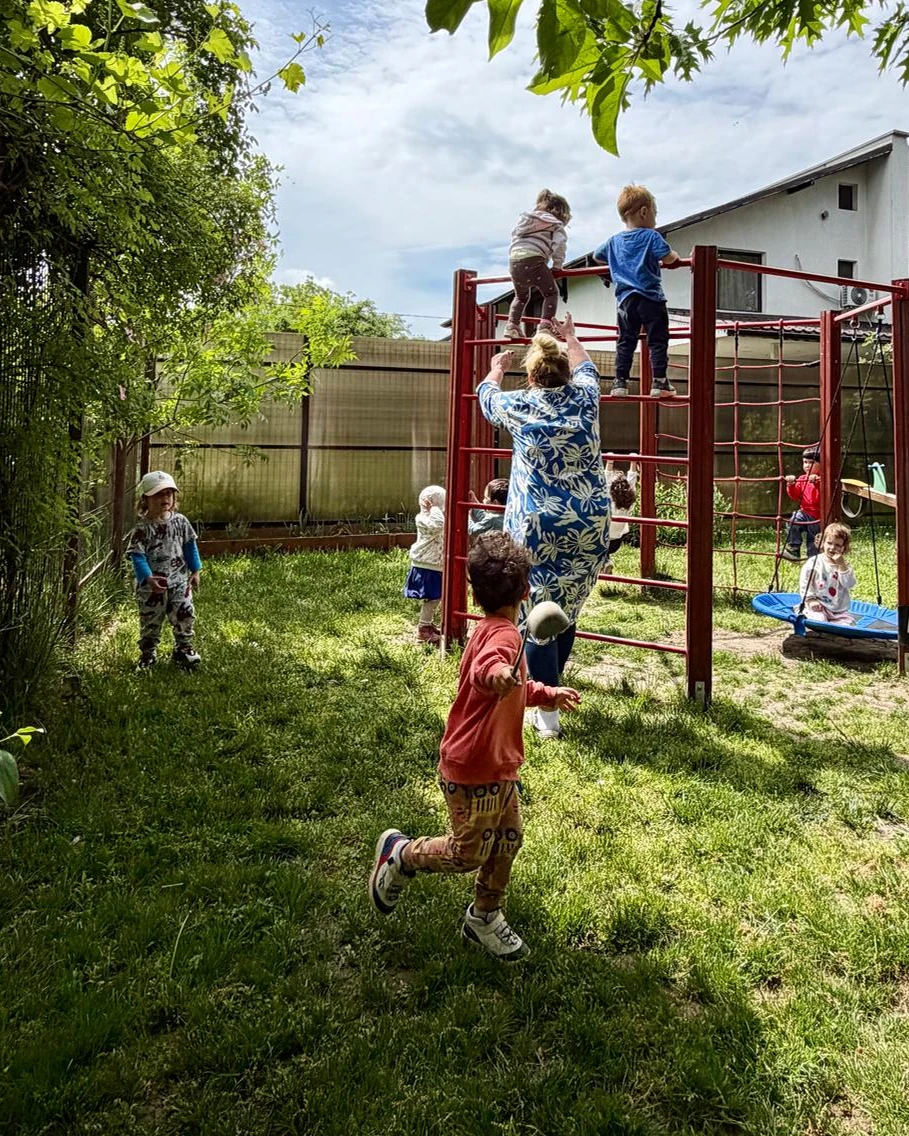
Children ride bikes and tricycles, climb, run, play in the sand and explore the outdoor space.
The varied ground, with changes in level and surfaces of earth, tartan and stone, offers different movement experiences. The child learns to adapt their step, keep their balance and discover their body and its limits.
Meals and rest
Moments of care that build autonomy
Meals – one more step towards autonomy
At 9:00, breakfast is served as a buffet, where children choose and prepare what they eat themselves.
At lunch, children are served but eat on their own. At the end they gather their leftovers, throw them in the bin and take their plate to the sink.
Lunch and the afternoon snack come from our partner kitchen Health&Joy, with a menu approved by a nutritionist. Allergies, intolerances and dietary restrictions can be accommodated.
See the children's menuRest
Children rest in a separate room, each in their own bed. Sleep is not compulsory: we respect each child's needs. Those who do not fall asleep stay quietly in their bed, so that those who need sleep can rest.
Settling in at Arcadia
We do not rush separation. We build the security that makes it possible.
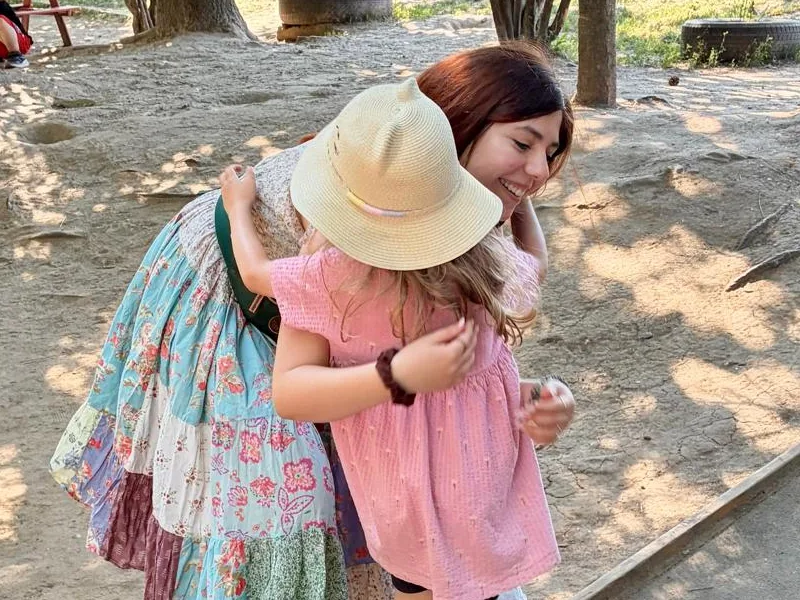
For us, settling in does not just mean a child staying without their parent. It means a relationship of trust built gradually between child, parent and teacher.
- 1
Getting to know each other on the sofa
Parent and child sit in the central hall. The teacher comes over, talks with the parent and gradually invites the child to play.
- 2
First visit to the classroom
The teacher suggests to the child that they go up to the classroom together and presents a material. The parent stays in the hall.
- 3
They can go back at any time
If the little one wants mum or dad, the teacher takes them back. We do not persuade them to stay or distract them. Then we try again.
- 4
Trust is built on predictability
The child discovers that they can go with the teacher and that, when they need to, they can return to the parent.
- 5
Moving to the standard day
The teacher and the parent decide together when the child stays until 16:30.
In the first three days, settling in starts at 10:00 and the child stays only for the short day, until 13:00 at the latest. In the first two days, if the child is tired, we recommend ending the day at 12:00.
We can talk about settling in at the visit.
Come and see the 1.8–3 years group
Book a visit and come see the environment, meet the team and get a feel for the rhythm of a day with us.
or call 0724 557 667