In short
Why children of different ages in the same group?
Because a child's development does not follow school years, but planes of development. Maria Montessori described four planes of six years each: 0–6, 6–12, 12–18 and 18–24. Each plane has a different way of learning, different needs and a different way of seeing the world.
Within each plane there are two stages of three years. The first six years are thus divided into 0–3 and 3–6, stages we recognise in our two groups: the 1.8–3 years group and the 3–6 years group.
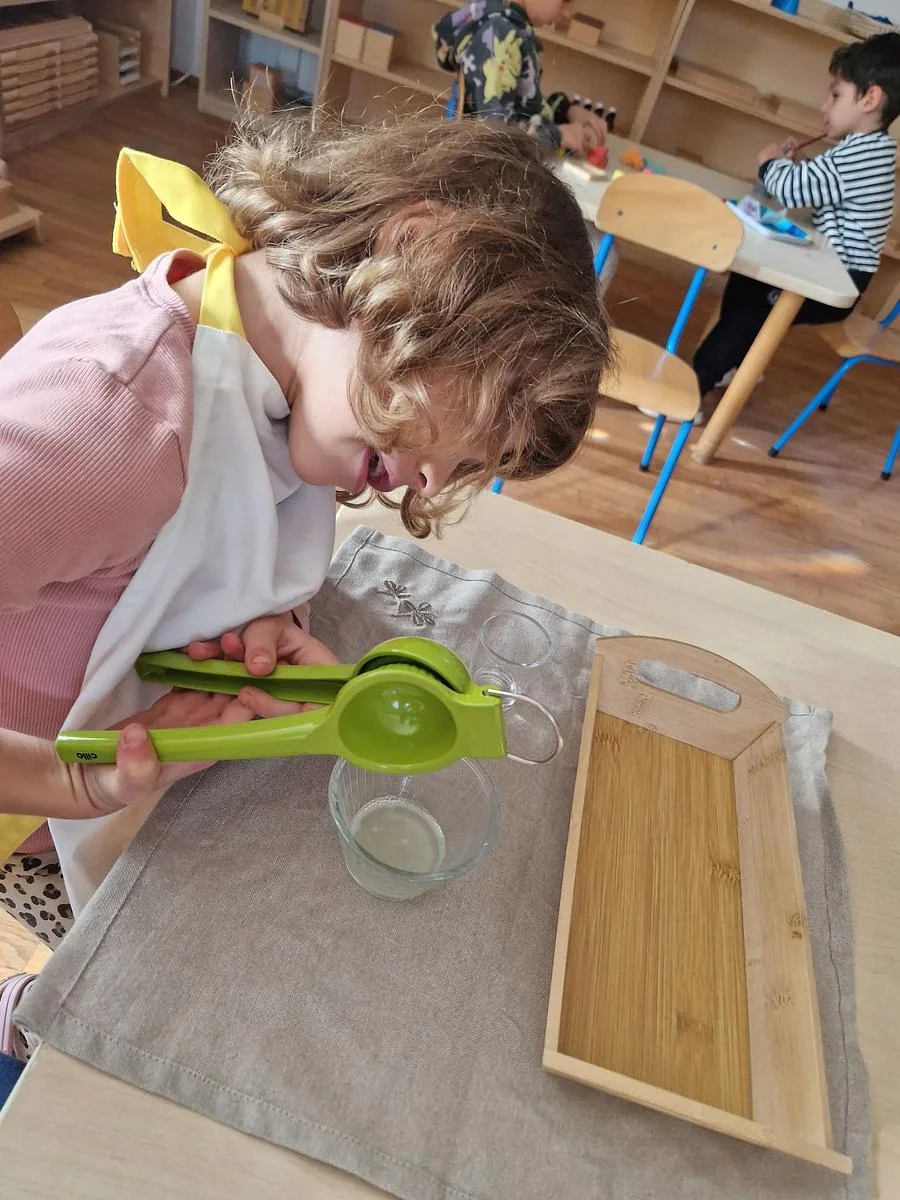
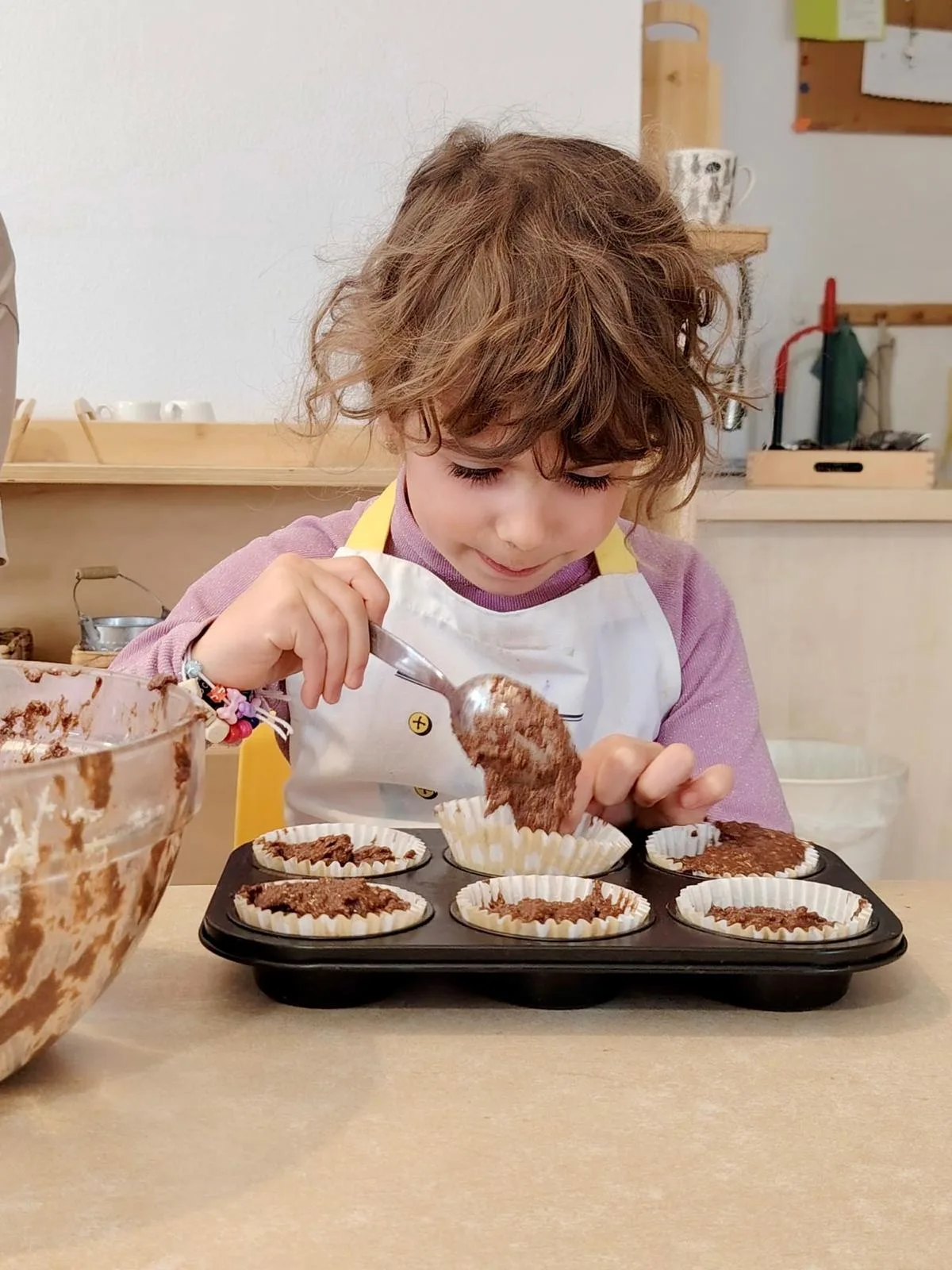
Children in one stage have similar needs, even if they are different ages. A three-year-old and a five-year-old both learn by working with their hands, through repetition and at their own pace.
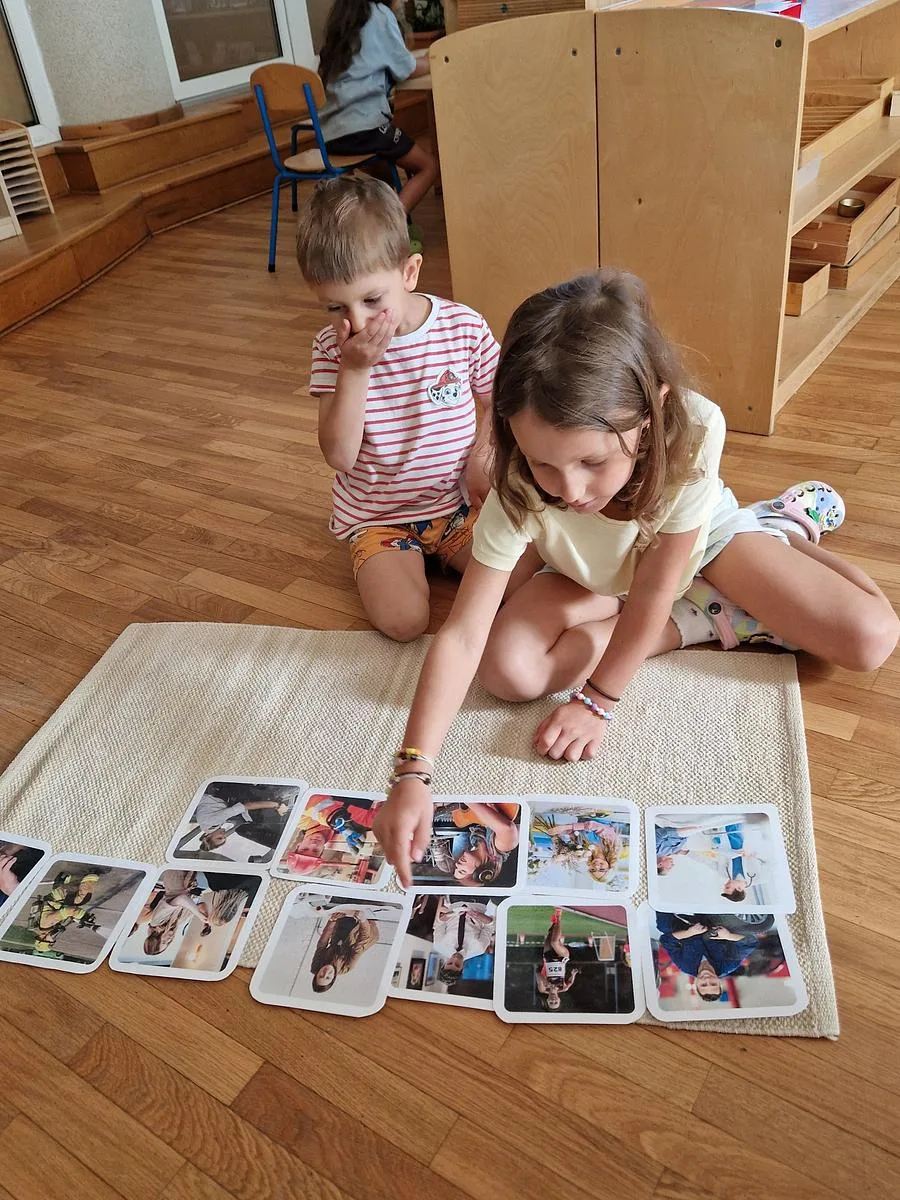
On the other hand, two children of the same age can be at different points: one is just discovering the materials, the other is already drawn to more complex activities. That is why, in the 3–6 years group, all three ages are together.
What do children gain in a mixed-age group?
A three-year-old joins the group as the youngest. Three years later they will be the oldest, and the gaze of the younger ones helps them take on responsibility. It resembles a family or a real community, where people of different ages live and work together.
Isn't it too hard for the little ones?
No, because the environment is organised so that each child works at their own level, and the teacher presents materials individually, not in front of the whole class. The younger child is not pressured to keep up with the older one, only inspired by them.
What this looks like at Arcadia
At Arcadia, the 3–6 years programme has two mixed-age groups, Raze de Soare and Lotus, each with two adults at all times. What a day in these groups looks like, what materials the children use and how the teachers work is described on the Group 3–6 years page.
It is best seen in person. Visits to the 3–6 years group take place between 14:00 and 15:00, by appointment only. To book a visit, call us on 0724 557 667, Monday to Friday, between 08:00 and 18:00.
For a general introduction, also read What does Montessori mean?