
Group 3–6 years
Group 3–6 years: Montessori kindergarten in Corbeanca
Between 3 and 6, children want to understand, to refine their skills and to take an ever greater part in the life of the community. The Montessori environment gives them the freedom to choose and the reference points they need for concentration, autonomy and responsibility.
At a glance
The 3–6 years group in a few lines
- Age
- 3–6 years, in mixed-age groups
- Groups
- two communities, each with 2 adults at all times
- Schedule
- short day until 13:30 · standard day until 16:30 · extended day until 18:00
- English
- Monday and Friday, with Andrei Popa, in small groups of 3–5 children, included in the programme
- Optional workshops
- 16:00–17:00: picnic stories, art & craft and aikido, dance, painting (extra cost)
- Enrolment
- possible during the cycle, depending on age and available places
How we work in the 3–6 years group
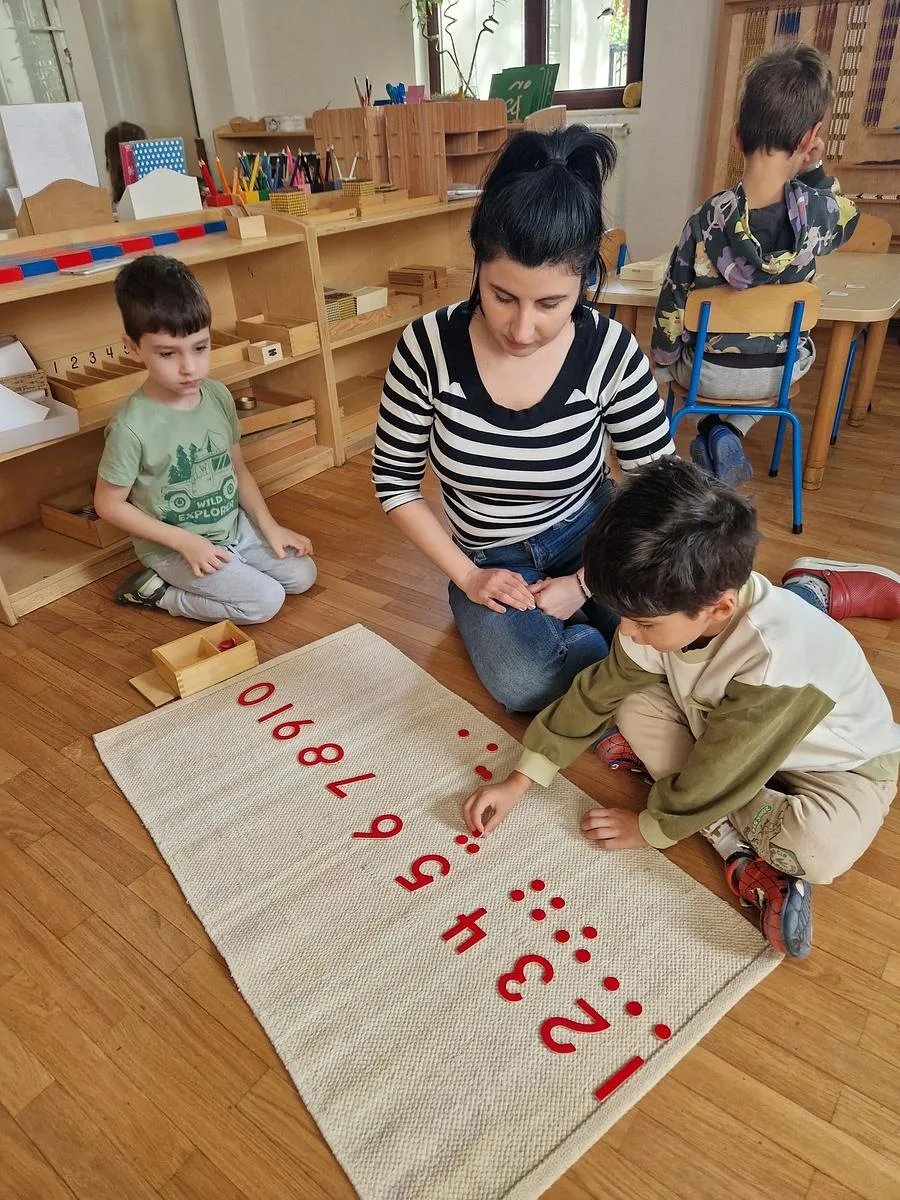
During the work cycle, the child chooses from the materials that have been presented to them, repeats an activity as much as they need and can watch what other children are working on. The teacher follows their progress and individually presents the next material when they are ready.
We do not ask all children to do the same thing, at the same moment and at the same pace.
Groups and team
Two communities, each with 2 adults at all times
Raze de Soare Group
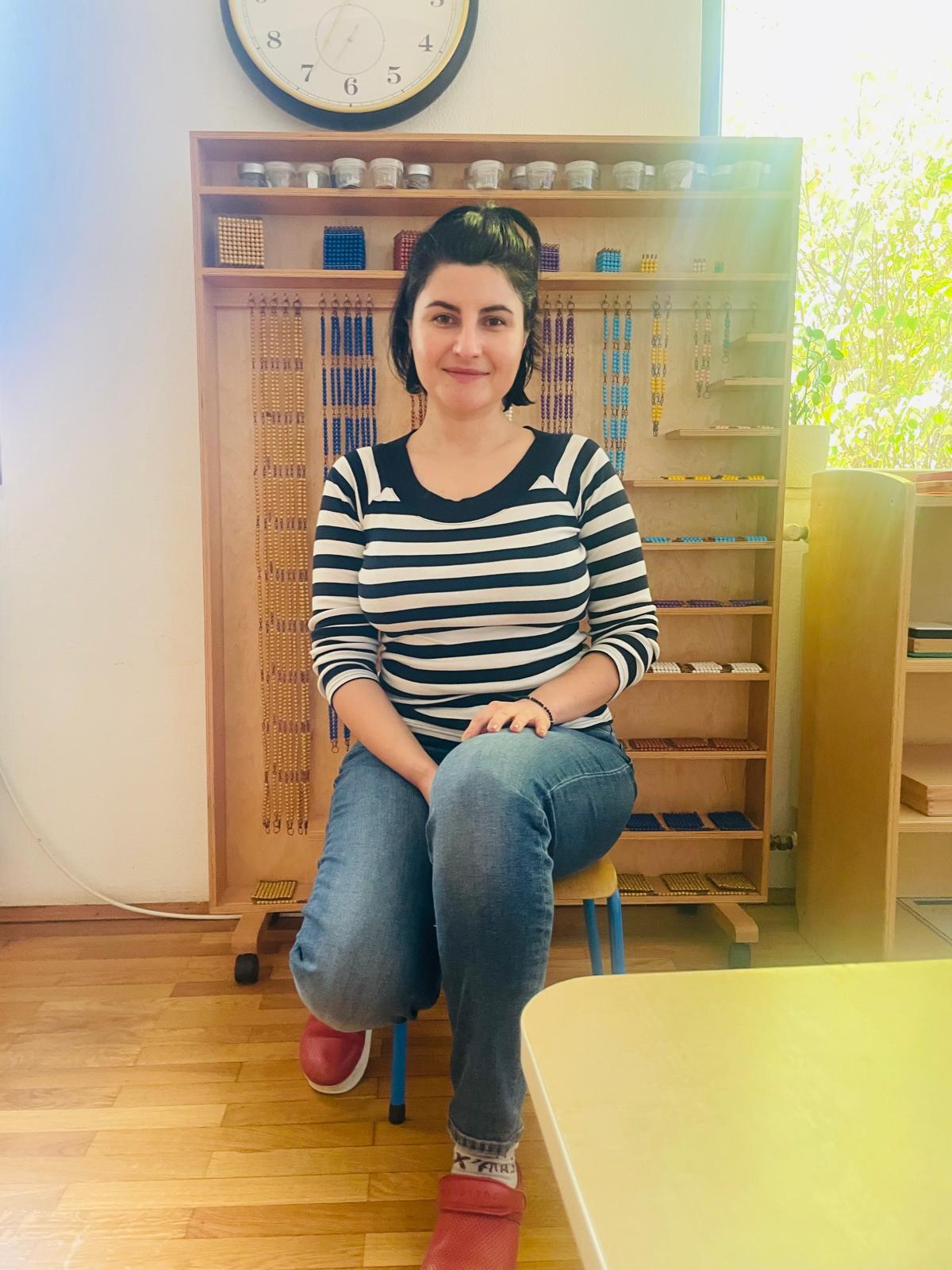
Cristina Barcan
Lead teacher · Primary and Preschool Pedagogy · AMI 3–6 years
A passion for child psychology brought Cristina to Montessori education. She sees the teacher's role as that of a "coach for life", helping the child discover their resources, learn from mistakes and not give up.
6 years of experience in the 3–6 years environment
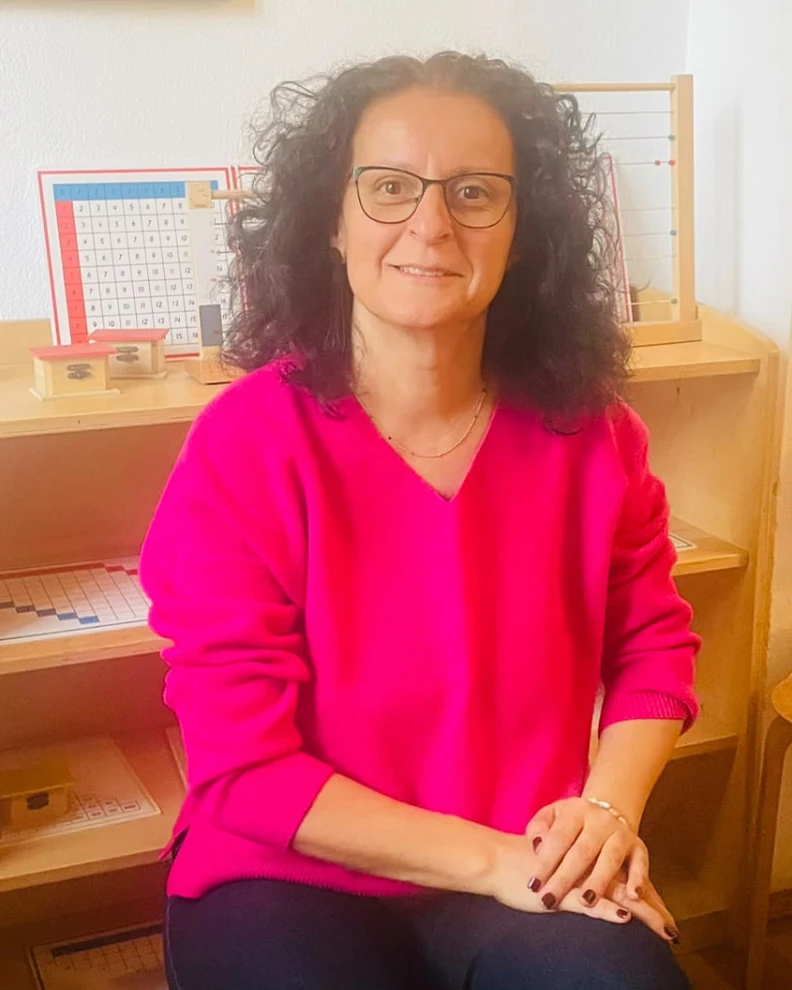
Nicoleta Leahu
Teacher · Primary and Preschool Pedagogy · AMI 0–3 and 3–6 years
For Nicoleta, the teacher's role means being present in difficult moments and staying with the child until they find their calm again.
5 years of experience in the 3–6 years environment
“I hold the child with both hands when things are hard, and I see the child especially when they don't know it.”
Lotus Group
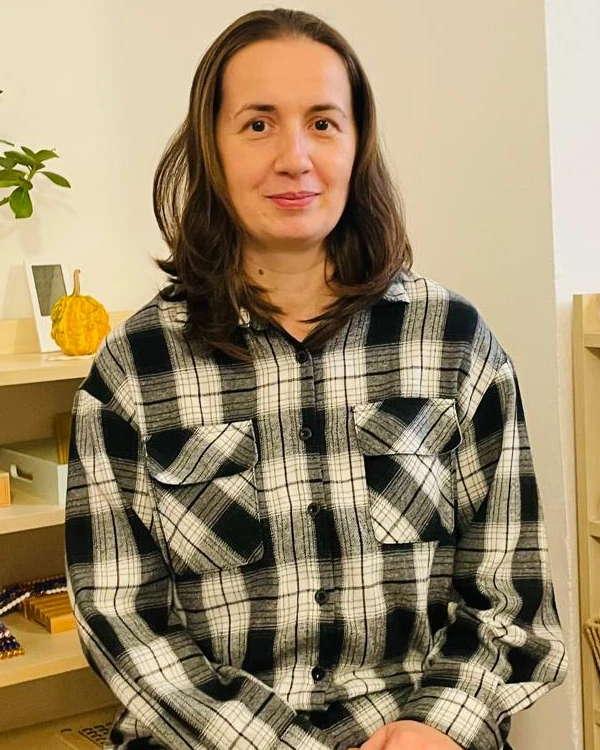
Cristina Nicolescu
Lead teacher · AMS 3–6
Cristina sees the teacher as a guide who learns and grows alongside the children, always seeking to understand what lies behind a refusal or a difficulty.
“I see each child not only as a child in the group, but as a child who is important to someone.”
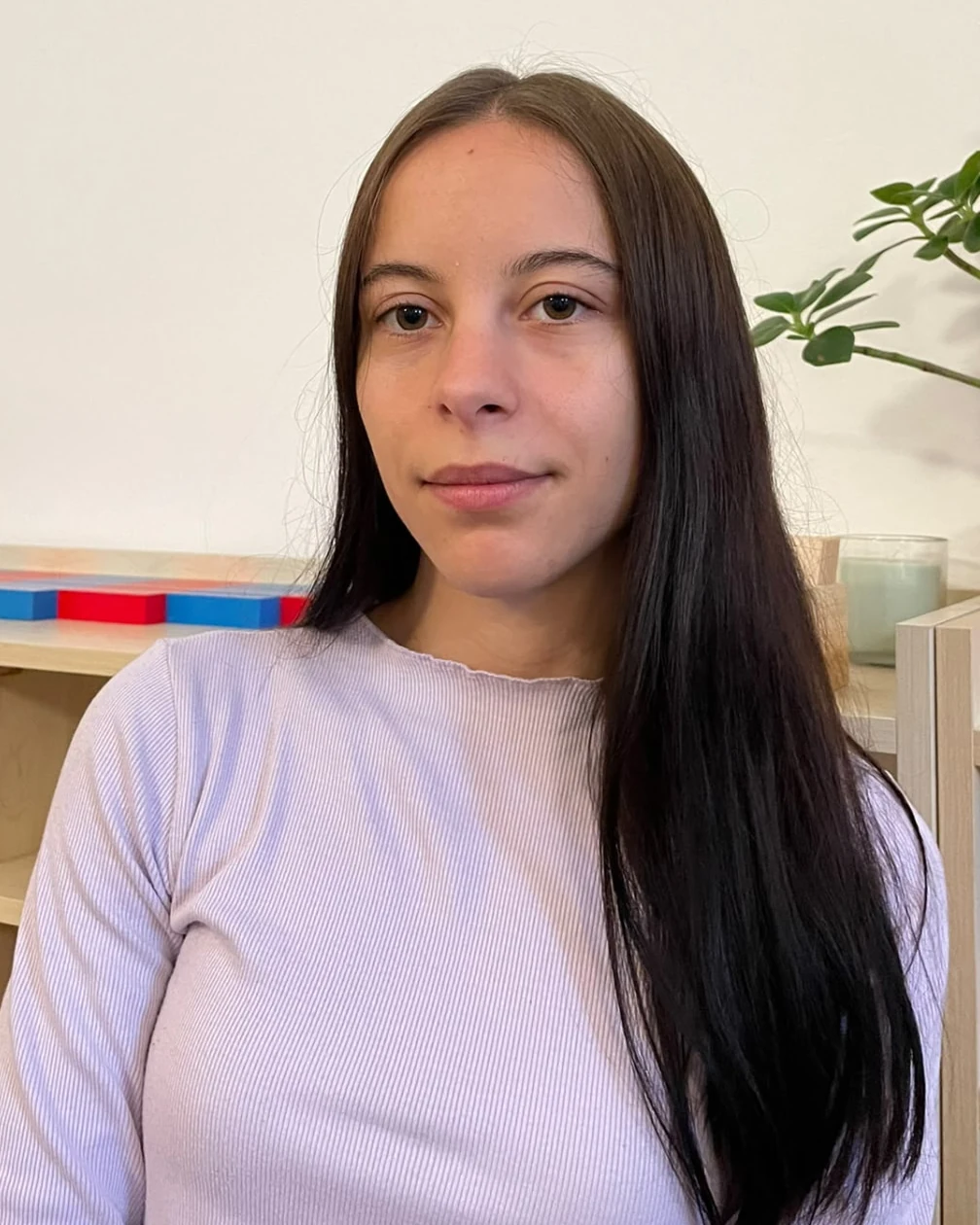
Raluca Gortoescu
Teaching assistant · Primary and Preschool Pedagogy
Raluca guides children as they explore the areas of learning and discover the rules of living together in the group. For her, the relationship with the child is built through trust, respect and authenticity.
Daily schedule
A day in the 3–6 years group
- 08:00–09:00 · Children arrive
- 09:00–12:00 · Montessori work cycle (last 15 minutes: wrap-up, attendance and circle discussion)
- 12:00–12:30 · Lunch
- 12:30–13:30 · Movement and outdoor activities
- 13:30End of short day
- 13:30–15:15 · Rest
- 15:30 · Afternoon snack
- 15:45–18:00 · Optional workshops and/or outdoor activities
- 16:30End of standard day
- 18:00End of extended day
What children learn
Five Montessori areas, three hours of work a day
For three hours a day, the child works in an environment prepared around the five Montessori areas. Presentations are mainly given individually, and some – such as the Sound Game or the decimal system – in small groups of two or three children.
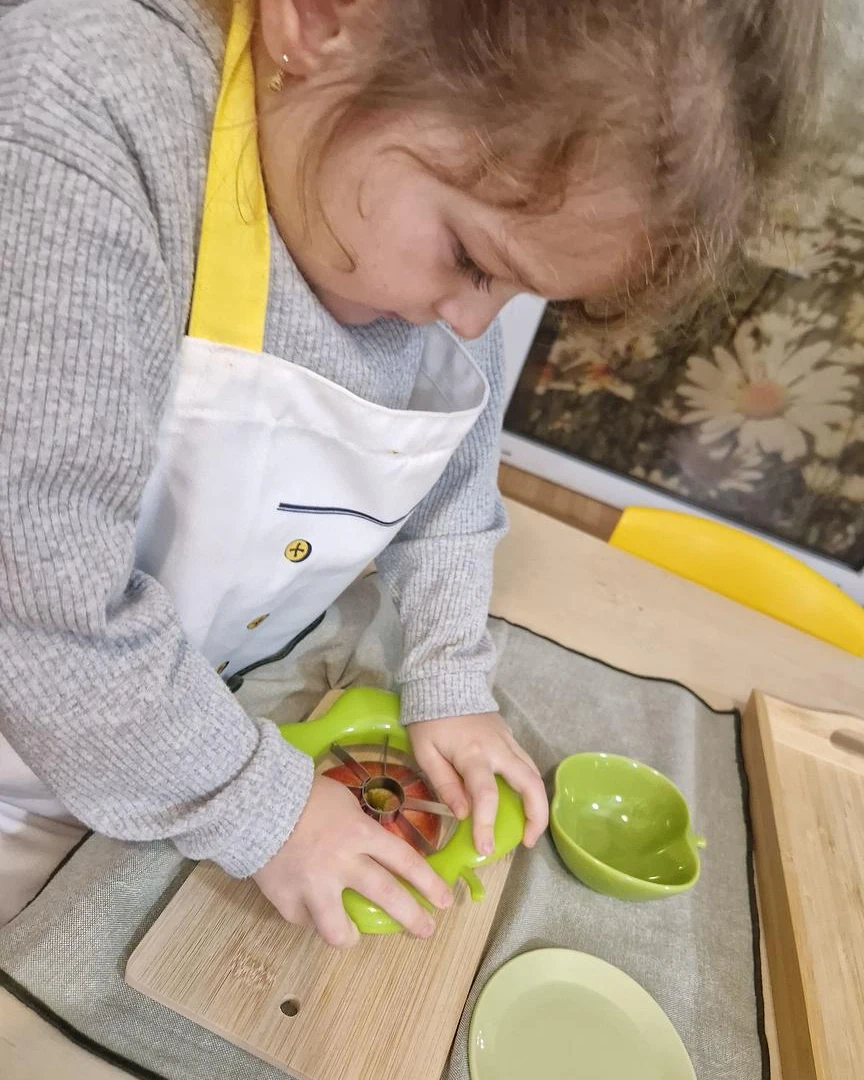
Practical life
Activities come from real life: transferring beans with a spoon, pouring water from a jug, washing the table, folding clothes, screwing, washing hands, preparing carrot, cucumber, egg or orange juice. Behind these gestures, coordination, order, concentration and independence are built.
If a child does not want to work at a given moment, they are not required to choose a material. They can watch another child or spend time in the reading area. The teacher follows progress through observation and individual records and steps in when the child needs a new challenge or support.
English
English, included in the programme
On Mondays and Fridays, between 09:00 and 11:00, children in the Lotus and Raze de Soare groups work with Andrei Popa in small groups, usually 3–5 children. English is part of the Arcadia programme and is included, at no extra cost.
Andrei has 10 years of experience in education and has been part of the Arcadia team for more than four years. English is integrated into work with Montessori materials, practical life exercises, exploring pictures and the conversations that accompany the children's actions.
We do not aim for memorising word lists, but for understanding the language in familiar contexts and using it spontaneously.
He respects each child's pace and does not push them to speak English before they feel ready. His greatest joy: when parents say the little ones use words and expressions learned at kindergarten at home.
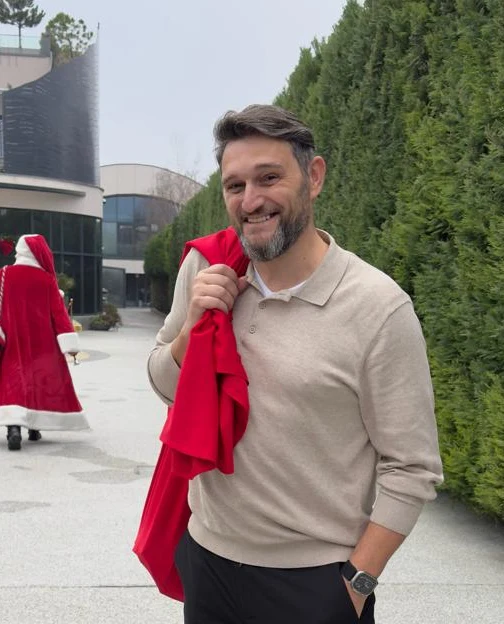
Andrei Popa · English teacher
About Andrei and the team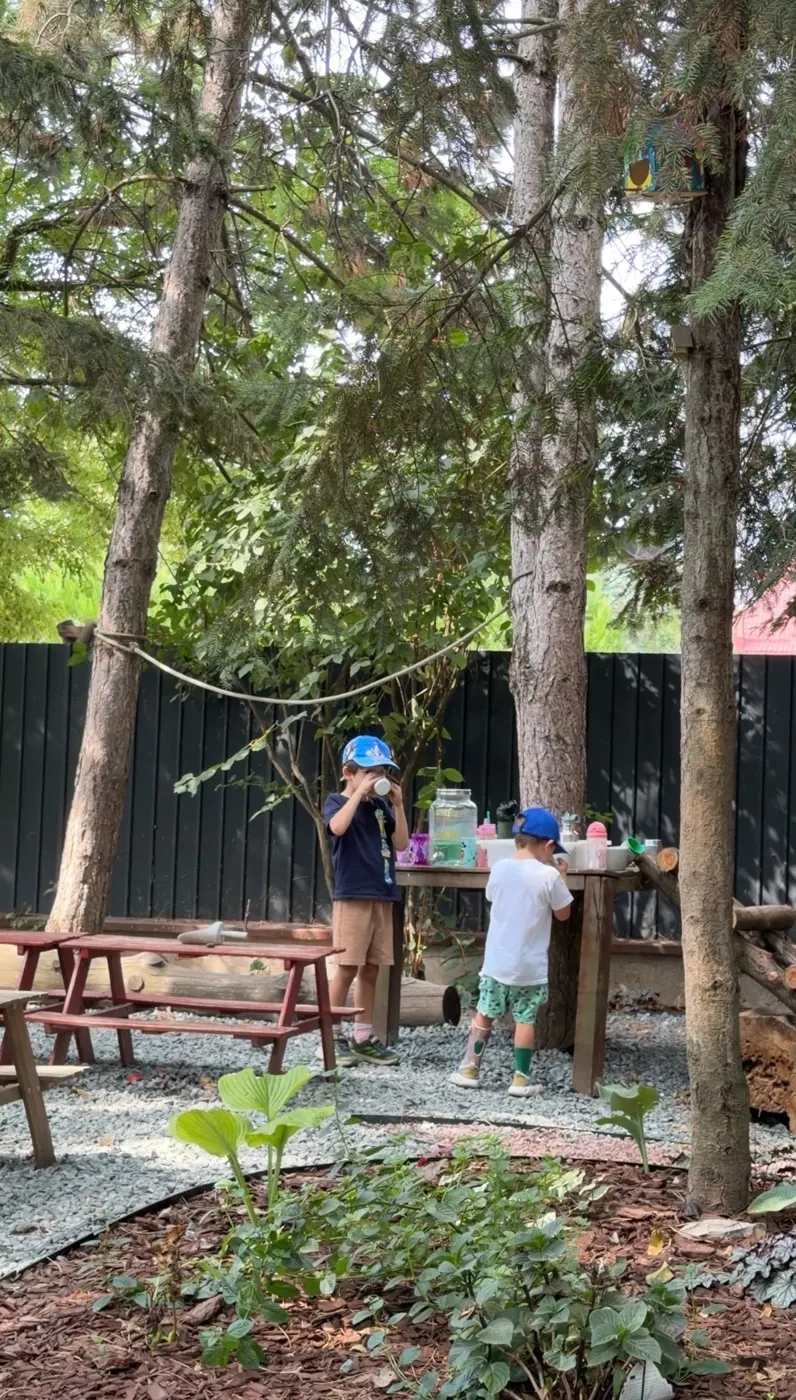
The garden
Movement, exploration and managed risk
Children from all groups have access to the whole garden: three climbing areas, a hexagonal structure with six climbing surfaces, a climbing wall, a slide, four swings, 12 balance bikes, balls and a structure built around a tree, with logs, a platform and a rope.
Autonomy every day
The child takes care of themselves, the environment and their own voice
1. Takes care of themselves
Dresses and undresses alone, organises their clothes in their backpack and cubby, pours their own water.
2. Takes care of the environment
Cleans the table or floor when they get dirty, sets the table, puts materials back, looks after the plants.
3. Finds their voice
Learns to say what bothers them, to set limits and, when they can, to resolve conflicts on their own. The adult remains available.
Lunch
Children take an active part in serving the meal. They come with their bowl to the serving station, receive the first course, then return for the next. They take their own bread and cutlery and help clear the table.
See the children's menuRest
Between 13:30 and 15:15, children go to the rest room. Sleep is not compulsory: some sleep, others rest quietly in their own bed.
Settling in
Settling in, a partnership between child, family and teacher
- 1
Getting to know each other
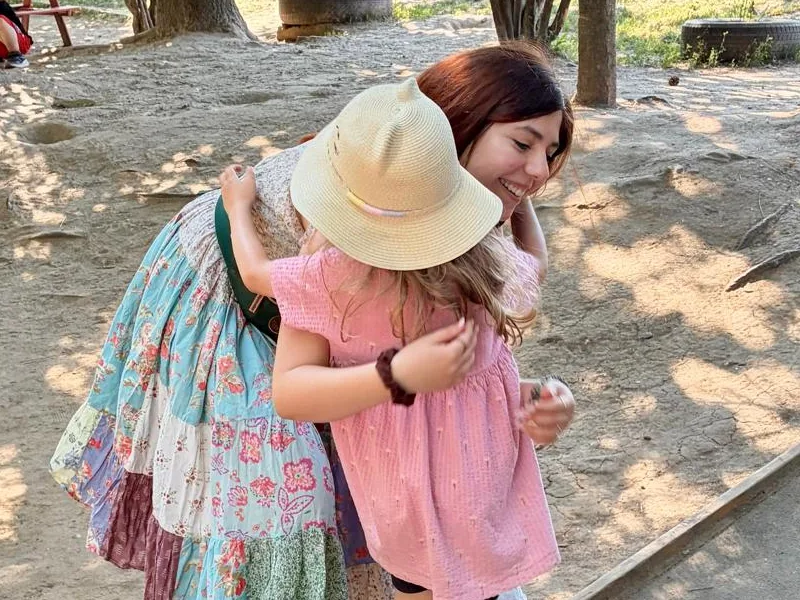
Child and parent arrive at 09:00 and sit on the sofa in the central hall. The teacher comes to meet them.
- 2
The way to the classroom
The child goes with the teacher to the classroom (one next to the central hall, the other on the lower ground floor).
- 3
A clear, predictable goodbye
After the first days, the parent tells the child they are leaving and will come back, and the teacher accompanies the child through this transition.
We can talk about settling in at the visit.
Optional workshops
Between 16:00 and 17:00, children can take part in picnic stories, art & craft and aikido, dance or painting and visual arts. Workshops are optional and cost extra.
See the workshop scheduleAdmission to the 3–6 cycle
Enrolment is possible during the cycle, depending on the child's age and available places. For children near the end of the cycle, admission is discussed individually, because settling into a Montessori environment takes time.
From Arcadia to school
How we prepare children for the preparatory class
School readiness concerns the child's development as a whole, not just academic skills. What matters is their ability to adapt to a new environment, to communicate what they need, to ask for help and to respect rules and responsibilities.
What we look for at 5–6 years
Autonomy
Dresses and puts on shoes alone, looks after personal belongings, follows the routine and asks for help when needed.
Attention and concentration
Starts an activity, works with a purpose, follows instructions, completes tasks and returns to work after a difficulty.
Emotional and social development
Waits, respects limits, communicates needs and emotions, cooperates and resolves simple conflicts.
Cognitive development
Curiosity, initiative, clear communication, progress in writing and reading and understanding of mathematical concepts, at each child's pace.
Montessori does not prepare the child only for working with specific materials, but for learning and functioning with more independence.
How children move on to traditional school, and other answersCome and see the 3–6 years group
Book a visit and come see the environment, meet the team and get a feel for the rhythm of a day with us.
or call 0724 557 667